Pro Tips: Best Solid Oak Dining Tables for Farmhouse Kitchens
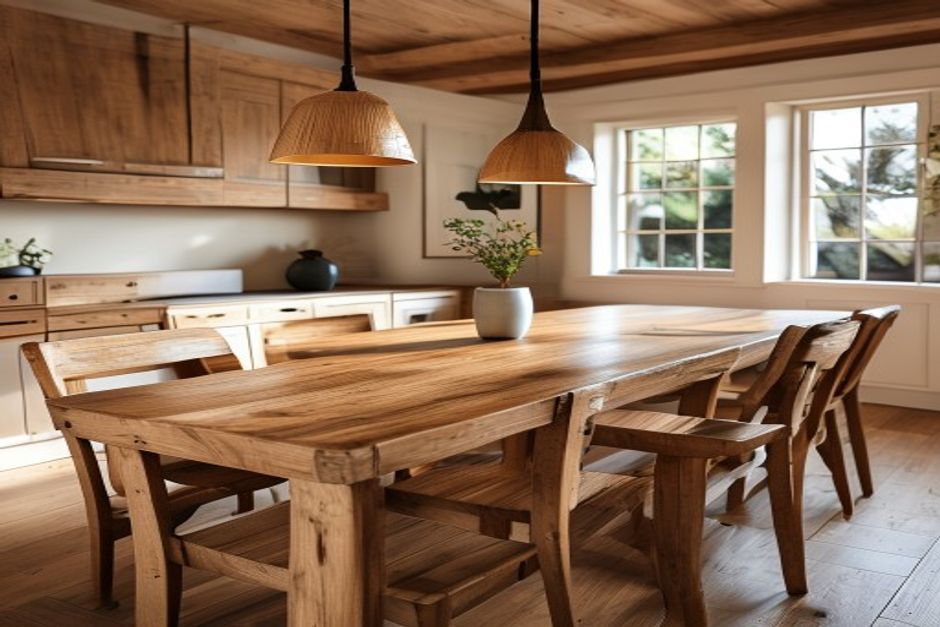
While many homeowners are drawn to the rustic charm of oak, the difference between a fleeting trend piece and a generational heirloom lies in the technical details of the wood and construction. When hunting for the best solid oak dining tables for farmhouse kitchens, you must move beyond surface aesthetics to evaluate structural integrity and material sourcing. This guide dives into the advanced criteria that separate premium craftsmanship from mass-produced imitations.
Decoding the "Quarter-Sawn" vs. "Plain-Sawn" Grain Myth
In the farmhouse aesthetic, the visual impact of the grain is paramount, but the cut method dictates long-term stability. Many buyers mistakenly assume any oak table with a straight, vertical grain pattern is superior. However, the industry standard for high-end farmhouse pieces is quarter-sawn oak. Unlike plain-sawn boards, which are prone to cupping and warping as they react to humidity changes, quarter-sawn oak exhibits a distinctive "ray fleck" pattern and significantly higher dimensional stability. When inspecting a table, look for a consistent, cathedral-like grain pattern running perpendicular to the growth rings. If the grain is irregular or the table wobbles slightly on a level floor, it may be constructed from plain-sawn wood that lacks the necessary stability for a heavy-use dining environment.
The Critical Importance of Mortise-and-Tenon Joinery
The soul of a farmhouse table is not just the tabletop, but the legs and apron. A common advanced pitfall is purchasing a table that relies on dowels or metal bolts for structural support. While these methods are acceptable for budget-friendly pieces, they often fail to accommodate the natural expansion and contraction of solid wood over time. For a true farmhouse investment, you must insist on mortise-and-tenon joinery. This traditional technique involves a tenon (a protruding piece of wood) on the leg fitting tightly into a corresponding mortise (a hole) in the apron. This design allows the wood to breathe and move with the seasons without cracking the joints. Look for visible dovetailing or double-dovetail mortises, which offer superior resistance to racking forces compared to simple square cuts.
Understanding "Finger-Jointed" vs. "End-Matched" Tops
One of the most deceptive marketing terms in this niche is "solid oak." A savvy buyer must distinguish between a table made from a single slab of wood and one constructed from multiple pieces. While a single slab offers a unique, continuous grain, it is incredibly expensive and susceptible to cracking across the center. The best middle ground for durability and aesthetics is an end-matched or book-matched top. In this configuration, the woodworker cuts the slab in half and arranges the pieces to mirror each other, creating a symmetrical, cathedral pattern. Avoid tables with "finger joints" or "biscuit joints" visible on the tabletop surface, as these indicate the use of many small strips glued together, which can create weak points and a less authentic farmhouse look.
Surface Finish and Oil Penetration
The finish on a solid oak dining table serves a functional purpose beyond aesthetics; it is the first line of defense against moisture and heat. Cheap tables often come pre-finished with thick polyurethane or varnish that seals the wood but can peel or yellow over time. For a farmhouse kitchen where spills and heat are inevitable, opt for a table with a penetrating oil finish, such as tung oil or a high-quality linseed oil blend. These finishes soak into the wood fibers, enhancing the natural grain and providing a tactile, warm feel that improves with age. Check the manufacturer's specifications to ensure the finish is non-toxic and food-safe, especially if you plan to place hot cast-iron skillets directly on the surface.
Common Advanced Pitfalls to Avoid
Even with the best intentions, buyers often fall into specific traps that compromise the quality of their purchase. First, be wary of "oak veneers" sold as solid wood. Veneers are thin slices of real oak glued over a cheaper core, often pine or MDF. While they look like oak, they cannot be sanded down to repair scratches, limiting the table's lifespan. Second, avoid tables with plastic or laminated aprons. The apron is the structural frame that holds the legs; if it is made of a composite material, it may delaminate when the solid oak top expands. Finally, check for pre-drilled holes intended for future leg attachments. These holes weaken the structural integrity of the apron and indicate that the table may have been designed for a different leg configuration, potentially affecting stability.
Final Recap for the Discerning Buyer
Securing the best solid oak dining tables for farmhouse kitchens requires a shift from looking at price tags to analyzing construction methods. Prioritize quarter-sawn wood for stability, demand mortise-and-tenon joinery for durability, and verify that the top is end-matched rather than finger-jointed. By focusing on these technical specifications, you ensure that your dining table will withstand the rigors of daily life while maintaining its rustic elegance for generations. Remember, a farmhouse table is a long-term investment, and the details you overlook today can lead to costly repairs or replacements tomorrow.